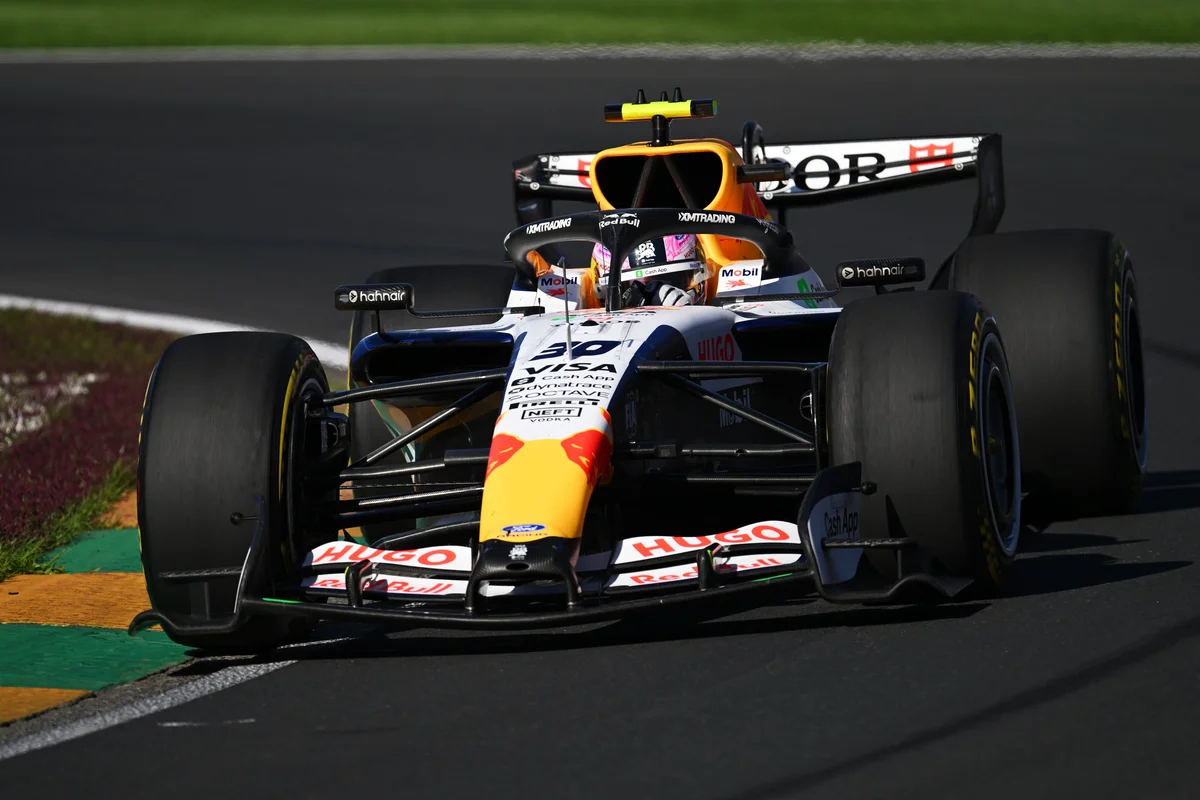
Liam Lawson's Stellar P8 Qualifying at the F1 Australian Grand Prix: A Glimmer of Untapped Potential
The roar of Formula One engines at the iconic Albert Park Circuit in Melbourne always promises drama, and the Australian Grand Prix rarely disappoints. For New Zealand's rising star, Liam Lawson, the qualifying session for the season-opening event delivered a moment of undeniable brilliance: a P8 grid slot. This impressive display on the track, often searched as "lawson gp austrália" by eager fans, highlighted the young Kiwi's raw talent and adaptability, even if the race itself presented unforeseen challenges. His journey from struggling in practice to securing a top-ten starting position was a testament to his determination and rapid learning curve in the highly competitive world of F1.
The Ascent to P8: A Qualifying Masterclass in Melbourne
Lawson's weekend in Melbourne began with a measured approach, as he navigated the complexities of the Albert Park circuit. Initially, the practice sessions saw him hovering outside the top ten, finishing 13th fastest in both the first and second sessions on Saturday. These early stages are crucial for a driver to fine-tune their car setup, understand tire degradation, and find their rhythm on the demanding street-like circuit. However, it was in the final practice session on Sunday where Lawson truly began to show his hand, leaping up to an impressive ninth fastest. This significant improvement hinted at a deeper understanding of the car and track, setting the stage for qualifying.
When it came to the high-stakes qualifying rounds, Lawson delivered. He showcased remarkable composure and speed, culminating in a superb P8 grid position for the main race. His best lap time of 1m 19.994s was not just competitive but also significantly faster than many seasoned drivers. This performance was particularly noteworthy as it placed him ahead of his Racing Bulls teammate, Arvid Lindblad, who was making his F1 debut. Outperforming a teammate, especially one in a direct comparison, is a critical benchmark for any driver looking to cement their place in Formula One. The fact that Lawson improved so dramatically from Friday to Sunday underscores his ability to quickly adapt and extract maximum performance when it truly matters. It was a performance that spoke volumes about his potential and readiness for F1's top tier.
A Statement on the Grid: Lawson vs. Teammate Dynamics
Securing the eighth spot on the grid at the Australian Grand Prix was more than just a good lap time for Liam Lawson; it was a clear statement of intent. In a sport where every fraction of a second and every grid position counts, starting P8 places a driver firmly within contention for points and provides a crucial advantage over midfield rivals. For Lawson, this achievement was amplified by the comparison with his teammate, Arvid Lindblad. Starting one place ahead of Lindblad, who was making his highly anticipated debut, not only boosted Lawson's confidence but also underscored his current standing within the Racing Bulls team. The margin of over a second between their best lap times further highlighted Lawson's pace and experience.
This kind of intra-team battle is fundamental in Formula One. Drivers are constantly evaluated against their teammates, making strong performances like Lawson's P8 essential for career progression and securing a permanent seat. While the Mercedes cars certainly dominated the front row in Melbourne, Lawson's position demonstrated that he could extract significant performance from his package, placing him at the sharp end of the midfield battle. Furthermore, this P8 represented a stark contrast to his previous experience at Melbourne a year prior, where a difficult weekend ultimately led to him being demoted by Red Bull. This year's qualifying performance offered a fresh start and the hope of happier memories, proving his resilience and growth as a driver since those earlier setbacks.
From Qualifying Promise to Race Day Reality: The Fickle Nature of F1
Despite the exhilarating high of P8 qualifying, the reality of race day at the Australian Grand Prix proved to be a harsh lesson for Liam Lawson. The promising grid position, which had generated significant buzz and anticipation among fans following the "lawson gp austrália" journey, unfortunately, translated into a P13 finish. This dramatic shift from potential points to a non-scoring position was largely due to a "horror start" that effectively crippled his race from the very first moment.
The immediate culprit was a critical lack of boost, which severely impacted his launch off the grid. In Formula One, a poor start can be incredibly difficult to recover from, as drivers lose vital track positions and find themselves caught in the midfield pack. Adding to the woes, Lawson's team communicated persistent battery and energy availability problems throughout the race. As his race engineer, Alexandre Iliopoulos, relayed the grim news – "We see the issue but there's nothing we can do for now. This is what we have" – it became clear that Lawson was fighting a losing battle against technical gremlins.
This sequence of events perfectly illustrates the often-fickle nature of Formula 1. A driver can deliver an exceptional qualifying performance, showcasing immense skill and speed, only for unforeseen mechanical or electronic issues to derail their race. The frustration for Lawson must have been immense, turning a weekend that had started with such promise into a "very forgettable end." For a deeper dive into the technical challenges faced by Lawson during the race, explore
Australian GP: Lawson's Race Marred by Battery & Start Issues.
Learning, Adapting, and Looking Ahead: The Broader Implications
While the Australian Grand Prix race outcome was undoubtedly disappointing for Liam Lawson, the weekend as a whole provides invaluable lessons and crucial data for both him and the Racing Bulls team. The stark contrast between his brilliant P8 qualifying and the P13 race finish offers a microcosm of the challenges faced by even the most talented drivers in F1. The P8 showed undeniable speed and potential, while the race day issues highlighted areas for technical improvement and reliability.
Lawson's engineer’s words, "Tough start, but the car is good so we'll have something to fight with for the next races," offer a glimmer of optimism. It suggests that the underlying performance of the car is competitive, and the issues faced were specific to race day, not indicative of fundamental pace problems. For Lawson, these experiences, though frustrating, are crucial for his development. He will meticulously debrief with his team, analyzing every detail of the start, the battery performance, and his own race management under duress. Such detailed analysis is how F1 teams and drivers extract marginal gains, turning setbacks into stepping stones.
Moreover, the P8 qualifying performance will not go unnoticed by decision-makers in the paddock. It reaffirms his capabilities and keeps him firmly in contention for a full-time seat in the future. The ability to bounce back mentally from such a rollercoaster weekend is also a critical attribute for an F1 driver. The "lawson gp austrália" narrative, therefore, is not just about a single race; it's a chapter in a longer story of a promising career. To understand the full spectrum of his Australian GP journey, from the qualifying triumph to the final race position, refer to
From P8 Promise to P13 Finish: Liam Lawson's Australian GP.
Conclusion: Liam Lawson's Enduring Potential
Liam Lawson's P8 qualifying at the F1 Australian Grand Prix stands as a powerful testament to his inherent talent, dedication, and rapid learning ability. While the race itself was marred by unforeseen technical issues that led to a disappointing P13 finish, the sheer pace and composure he demonstrated in securing a top-ten grid slot cannot be overlooked. The "lawson gp austrália" weekend, despite its challenging conclusion, served as a crucial proving ground, showcasing his potential to compete at the sharp end of the grid. As he and the Racing Bulls team meticulously review the data and prepare for upcoming races, one thing remains clear: Liam Lawson is a driver with the skill and resilience to make a significant impact in Formula One. This experience, both the highs and the lows, will undoubtedly forge him into an even more formidable competitor in the seasons to come.